Mimicry Elise Protocol 擬態艾利絲行動計畫
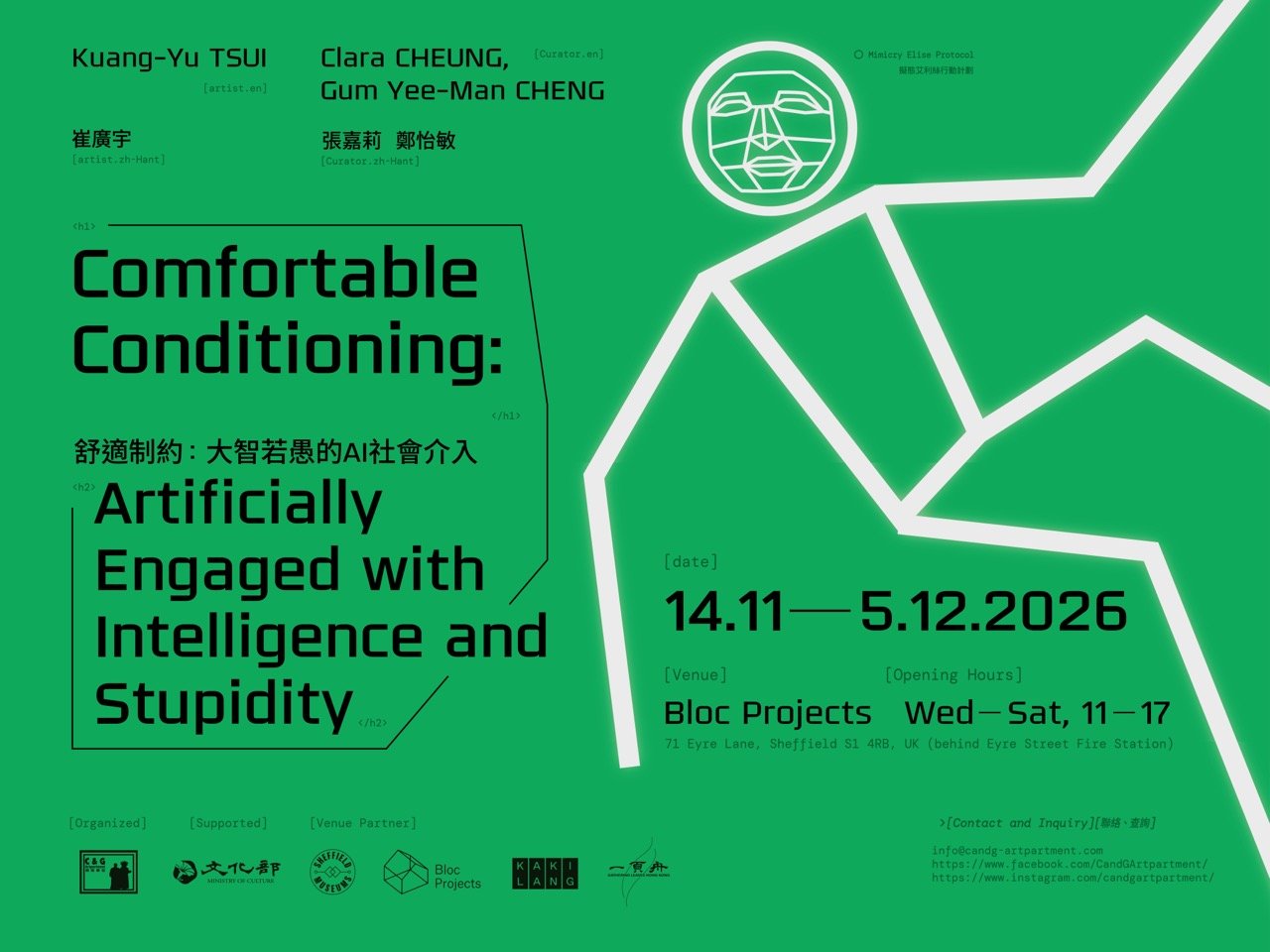
Comfortable Conditioning: Artificially Engaged with Intelligence and Stupidity
舒適制約: 大智若愚的AI社會介入
Artist / 藝術家: Kuang-Yu TSUI (崔廣宇)
Curator / 策展人: Clara CHEUNG & Gum Yee-Man CHENG (張嘉莉 & 鄭怡敏/阿金)
Exhibition #1
Exhibition Dates: 14 / 11 ~ 05 / 12 / 2026
Venue: Bloc Projects, 71 Eyre Lane, Sheffield S1 4RB, UK
Opening Hours: Wed – Sat, 11:00 – 17:00
Exhibition Opening: Sat, 14 Nov 2026 | 16:00 – 18:00
Exhibition #2
Exhibition Dates: 21 Nov 2026 (Sat) - 19 Dec 2026 (Sat)
Venue: C & G Artpartment, 71 Holme Lane, Sheffield, S6 4JP, UK
Opening Hours: Wed – Sat, 13:00 – 17:30
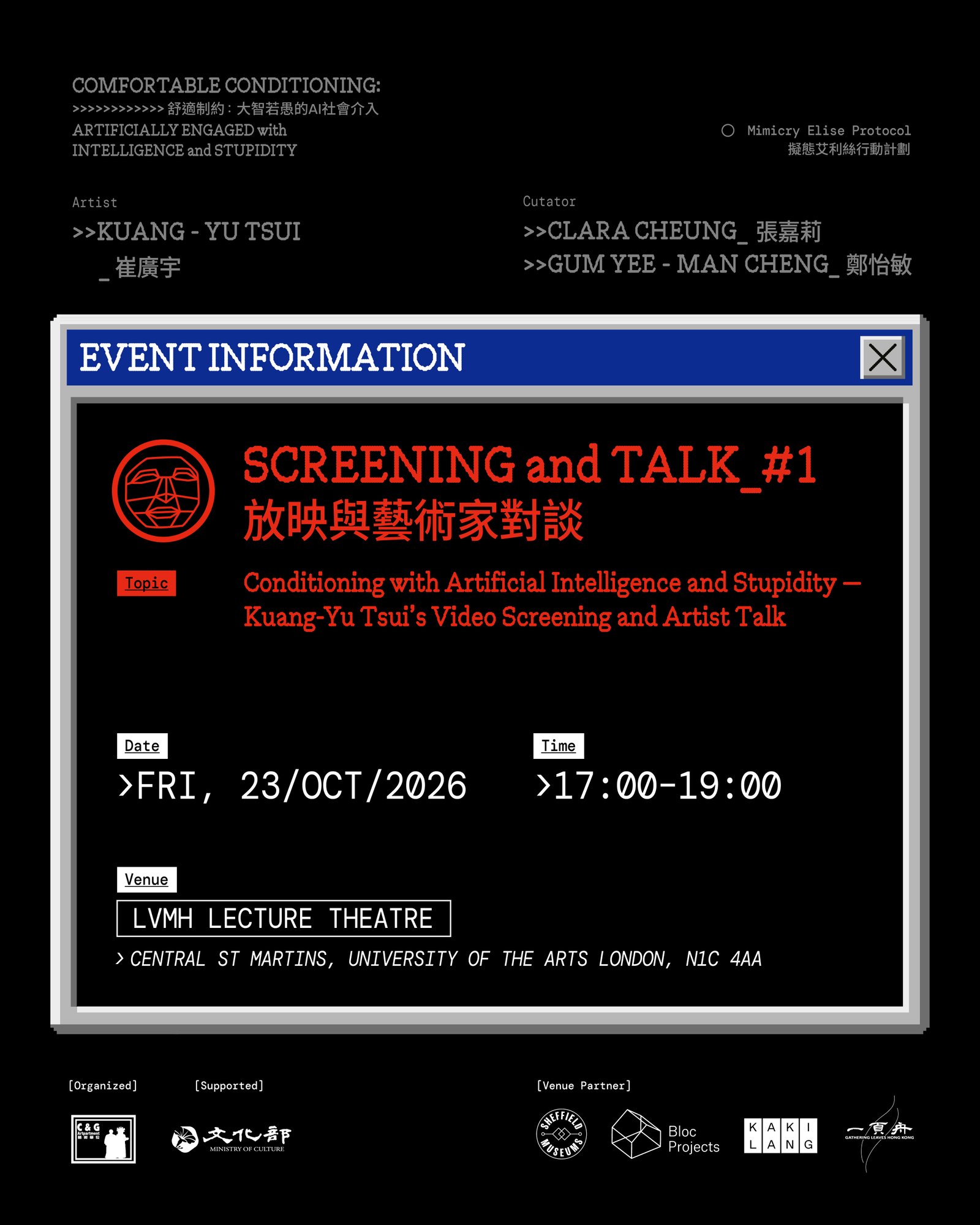
Screening and Talk #1
Event Title: Conditioning with Artificial Intelligence and Stupidity — Kuang-Yu Tsui’s Video Screening and Artist Talk
Date & Time: Fri, 23 Oct 2026 | 17:30 - 19:00
Venue: LVMH Lecture Theatre, Central Saint Martins, University of the Arts London
Featured Artist: Kuang-Yu Tsui
Organised by: C & G Artpartment
Partner: Kakilang
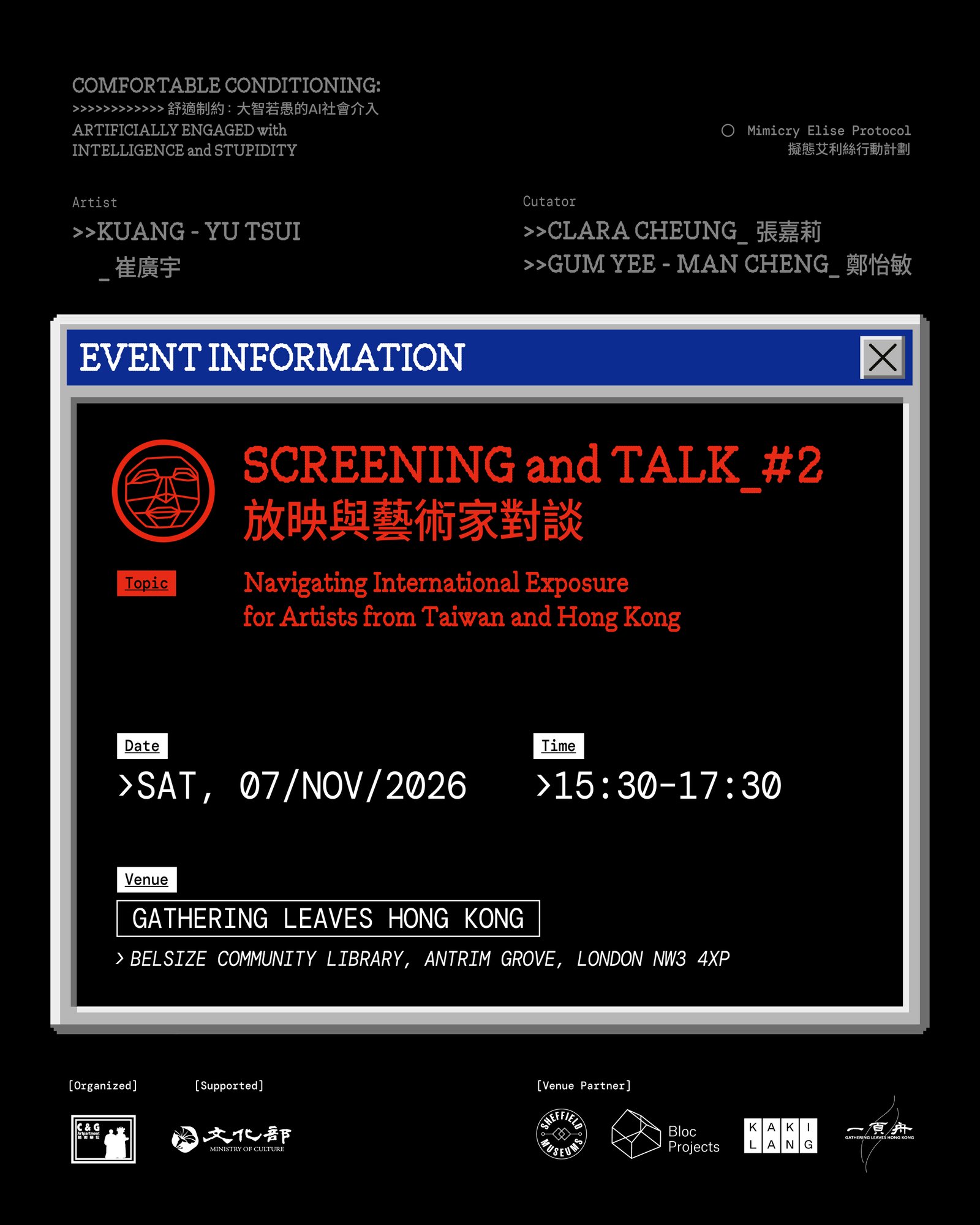
Screening and Talk #2
Event Title: Navigating International Exposure for Artists from Taiwan and Hong Kong
Date & Time: Sat, 07 Nov 2026 | 15:30 – 17:30
Venue: Gathering Leaves Hong Kong, Belsize Community Library, Antrim Grove, London NW3 4XP
Featured Artist: Kuang-Yu Tsui
Moderator and Discussant: Clara Cheung and Gum Cheng
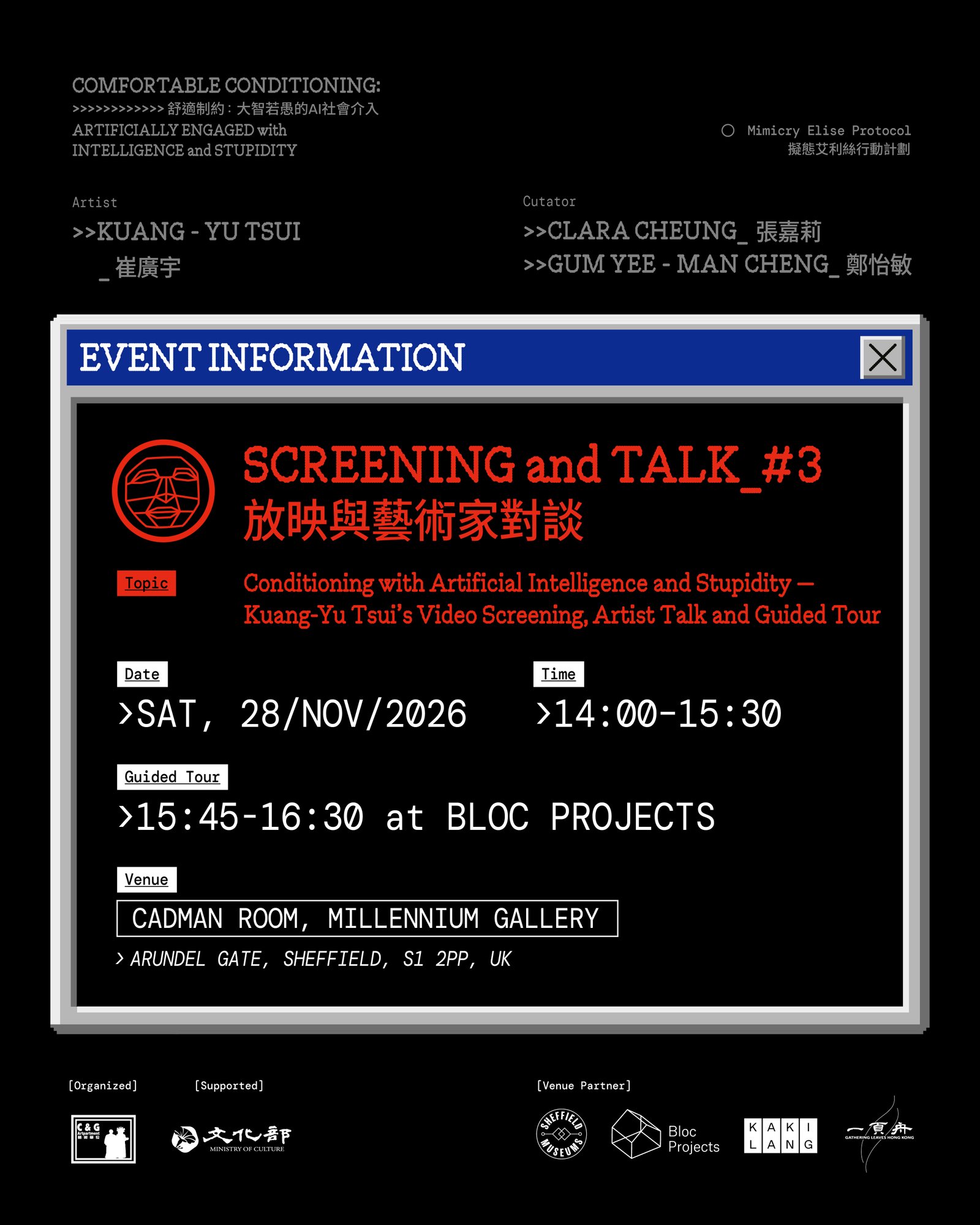
Screening and Talk #3
Event Title: Conditioning with Artificial Intelligence and Stupidity — Kuang-Yu Tsui’s Video Screening, Artist Talk and Guided Tour
Date & Time: Sat, 28 Nov 2026 | 14:00 – 15:30
Venue: Cadman Room, Millennium Gallery, Arundel Gate, Sheffield, S1 2PP, UK
Guided Tour: 15:30 – 16:30 at Bloc Projects, 71 Eyre Lane, Sheffield S1 4RB, UK
About the Exhibition:
Control and Indulgence
In the early video works of Taiwanese artist Kuang-Yu Tsui, we often see a form of unconscious self-indulgence, accompanied by an opposing sense of intense control. Moving through a cityscape, the artist uses his performative body to conduct a series of strange and playful urban experiments. These artworks reflect his pursuit of freedom and release from the pressures of urban life, while also questioning established social values and the expectations that a society places on individuals. The artist amplifies these questions through bold and uninhibited actions, then focuses them into brief moments on short videos, often creating an immediate sense of connection for the audiences.
With a closer look, however, it becomes clear that the artist’s performative acts were all carefully thought out and tightly controlled. What appears simple and spontaneous is, in fact, executed with remarkable precision.
Alongside Kuang-Yu’s latest work, "Mimicry Elise Protocol", the current solo exhibition also exhibits three of his earlier video works: "The Welcome Rain Falling from the Sky” (1997), "Eighteen Copper Guardians in Shao-Lin Temple and Penetration: The Perceptive” (2001), and "Invisible City: Liverpool Top 9"(2006). Together, this series of artworks offer audiences a comprehensive understanding of the artist and the development of his practice.
Conditioning
It seems that Kuang-Yu’s continuous engagement with performative video art has gradually, and almost indiscernibly, produced a form of “conditioning.” This process begins when a problem emerges in society, prompting the artist to reflect and respond through artistic actions. Over time, through repetition, the responses develop into a mechanism of conditioning: whenever a social problem arises, the artist instinctively responds through art. As problems continue to emerge, so does his practice, creating a cycle that seems impossible to stop.
The project of “Mimicry Elise Protocol” began with a form of social conditioning in Taiwan: when Taiwaneses hear the melodies of nineteenth-century classical pieces: “Für Elise” or “The Maiden’s Prayer,” they automatically queue up to dispose their rubbish at a designated site. As the artist explains, the project “explores how human beings rely on and adapt to the systems of data surveillance, public norms, and social structures.” In “Mimicry Elise Protocol,” AI agents were invited to adopt both the artist’s own style and the perspective of a highly intelligent life form, to interpret the interactions between human beings and the residues of the contemporary society in the public space. The final video piece in the exhibition then invites audiences to re-interpret, from a human perspective, the seemingly stupid yet profoundly intelligent interpretation of humanity itself.
Kuang-Yu’s current project takes the risk of inviting a computer to reorganise and redefine human social behaviours. It is a risk because of AI’s inherent unpredictability: “AI has bugs.” Looking at the current trends, AI may eventually be capable of doing almost anything and defining almost anything within the digital world — provided that humans would agree, and that artists would agree. If so, would the artists become overly passive? Could the creative act itself be subject to AI’s conditioning?
In response, Kuang-Yu attempts to intervene in this process of “conditioning”, by creating new possibilities to deliberately construct a series of constraints for his own practice. In other words, the artist attempts to “control” the AI system, while trying to rationally collaborate with it which attempts to imitate his own artistic approach. Together, they explore the gaps between different layers of conditioning as these constraints become entangled with one another, as well as the residues and remnants that are often overlooked within these multilayered spaces.
Value
Kuang-Yu states: “The production, selection, and interpretation of data often involves deep-seated cultural biases and value judgments.” Errors in artificial intelligence can sometimes be understood as mistakes or even malfunctions. Under normal circumstances, they would simply be discarded. In this project, however, the artist attempts to reveal these “residual values” contained in computational response, bringing it into view as something functional and even as a source of creative inspiration.
The idea of a “glitch aesthetic” was embraced by artists as early as the Dada and Fluxus movements. It often involved surreal forms of imagination, an engagement with the human subconscious, and attempts to explore what has been forgotten, overlooked, or ignored within it. Early glitch aesthetics were largely expressed through visual images. Nam June Paik, for example, used magnets to distort television signals and produce visual noise, asking why audiences not recognised the “beauty” within the noisy visuals earlier on.
In the current collaboration with AI, however, Kuang-Yu goes beyond simply presenting the visual “404 errors.” He takes elements within today’s big-data systems that are normally regarded as residual or useless, and reimagines them as part of a form of “intelligence.” Buddhist philosophy has taught us: “Profound wisdom can sometimes appear foolish; skilful techniques can sometimes appear clumsy.” Perhaps this is another way of understanding where intelligence may reside.
Living in an age of big data and artificial intelligence, humans and the digital world continuously shape and adapt to each another, but this does not necessarily mean there exists mutual respect between the two. There are blind spots within this relationship, and many fables have already suggested that these blind spots could eventually lead to disastrous conflicts. This exhibition does not intend to demonise the blind spots within the AI systems. Such blind spots of course sometimes are deliberately created, avoided, or concealed. “Mimicry Elise Protocol” reveals the artist’s effort to resolve the potential conflicts: by using AI as a creative tool, Kuang-Yu discovers the values of those residuals, that emerged in his creative process of avoiding and resolving the blind spots simultaneously.
Shifting away from performing on screen, Kuang-Yu now operates behind the scenes, developing his video works through a project-based framework. It is as if the artist has stepped outside a long-established comfort zone and taken a significant risk to have less control of the creative process. Alongside the AI, his new work continues to draw on the two elements that have long been central to his practice: interaction with the public and social conditioning within the public realm. "Mimicry Elise Protocol" is coming to the UK in autumn 2026. In the new environment, it will continue to interact with human beings and the big-data, allowing the AI to gradually generate a new kind of comfort zone.
This “comfort zone” may well conceal numerous blind spots and residual elements, yet when it first takes shape, we may still find ourselves enjoying it. But how long can the artist and audiences remain comfortable within this AI-generated “comfort zone”? How long will it take before we become restless enough to step outside to take another “risk”?
展覽簡介
操控與放任
台灣藝術家崔廣宇的早期錄像作品,彷彿都呈現潛意識中的一種自我放任,同時也展示一種反面的高度權力操控。藝術家遊走於城市當中,利用行為及個人身體的介入,完成很多古靈精怪的城市實驗,體現藝術家於城市壓迫下追求自由放任,並質疑社會的固有價值和社會對人的種種期望。藝術家以「狂莽」的方式將這質疑放大,再聚焦在一個短時間的錄像畫面上,往往令觀眾很快產生共鳴。
細緻觀看的話,不難發現錄像中,藝術家所作的行為,是經過深思熟慮、嚴密操控的。看似簡單,精準度卻是出奇的高。
今次崔廣宇個展中,除展出他最新作品《擬態艾利絲》,同場也展示他早期三件錄像作品(《天降甘霖》(1997) 、《十八銅人.穿透,感受性》(2001)、《隱形城市:利物浦精神》(2006)),讓觀眾更全面認識這位藝術家及他的創作歷程。
制約 Conditioning
感覺上,崔廣宇持續的錄像創作,會無形中生成一個「制約」。制約結構由社會出現問題開始,觸發藝術家反思,以藝術行動作出反應,久而久之,透過重覆的過程,藝術家就生產了一個「制約」機制:發現社會出現問題,就自自然然以藝術行動去回應。當社會持續出現問題,藝術家就持續創作,停不下來。
《擬態艾利絲》計劃就是由一個台灣的社會制約開始: 當市民聽到十九世紀古典音樂的旋律: 《致艾利絲》或《少女的祈禱》,就自動定時定點去掉垃圾。藝術家直言: 計劃「探討人在面對數據監控、公共規範與社會系統時的適應、依存及調整模式。」藝術家要求AI結合藝術家本身的風格以及高智慧生物的角度,去解讀現世人類於公共空間與社會剩餘物互動的行為。展覽中把這錄像呈現,邀請觀眾以人類的角度,去再解讀這大智若愚的人工智能對自身的解讀。
崔廣宇近期的AI計劃,透過人工智能的反饋功能,嘗試冒險讓電腦重組並重新定義人類的社會行為。冒險,是因為AI的不確定性:「AI有Bug」。看趨勢,AI幾乎可以在數碼世界中做任何事情、定義任何東西 — 前提是人類都接受,藝術家都接受。倘若如此,藝術家會否變得過於被動?連創作都被AI制約?
崔廣宇似乎也看到這點,對此質疑,並嘗試介入、衍生變化: 製造一系列制約去冒險地完成自己的創作。換句話說: 是藝術家「操控」AI系統,理性地與嘗試模仿藝術家本人的AI系統一起合作,發掘在不同層次互相糾纏的制約之間的夾縫,和處於多層夾縫中常被忽視的剩餘物。
價值
崔廣宇表示:「在數據的生成、篩選與解讀過程中,往往隱含著深層的文化偏見與價值判斷。」人工智能的誤差,有時甚至可說是錯誤或故障,正常來說,應該要「棄掉」,但在本計劃中,藝術家嘗試呈現電腦反饋的「剩餘價值」,展現其功能,甚至作為創作靈感來源。「故障美學」早於達達 (Dada) 、 激浪派 (Fluxus) 藝術運動中,被藝術家擁抱,當中無不涉及超現實的想像、觸碰人類的潛意識,甚至嘗試探索潛意識中被遺忘、被無視的剩餘物。早期的「故障美學」多呈現於視覺語言中,如白南准使用磁鐵扭曲電視信號,展現雪花,質問為何觀看電視的人不更早發現當中的「美」? 而崔廣宇是次與AI合作,不單只呈現或擁抱視覺上的「錯誤 /404 error」,更是進一步把當代大數據中被認為是剩餘物、無用的元素,體現為「智慧」的一部分。大智若愚,大巧若拙!?
身處於大數據、人工智能的世代,人類與數碼世界互相影響、互相適應,但未必互相尊重。當中有盲點,甚至有寓言說這些盲點會導致人類與數碼世界發生衝突。是次展覽並非要醜化AI系統的盲點,盲點有可能被刻意製造、迴避或隱藏 。相反,作品是藝術家嘗試解決衝突而產生的結果: 即是藝術家以AI作為創作工具,於避開和解決盲點的過程中,發現並呈現當中剩餘物的價值。
崔廣宇由早期的親身演繹、前線演出,至今漸退幕後,以「計劃型創作」發展一系列錄像作品。藝術家像是由一個長期的舒適圈,跳了出來,冒個大「險」。除了AI,新作品仍然有藝術家常依賴的兩個元素: 民眾互動及公共領域中的社會制約。新作品將會於2026年秋季來到英國,當中仍然有互動、有數據,繼續由AI帶領去分析、解讀,慢慢形成一個由AI衍生出來的舒適圈,縱使這個「舒適圈」極有可能隱藏著不少盲點及剩餘物,但在其最初形成時,大家還是會樂在其中。藝術家及各位觀眾究竟可以在這 AI領域舒適多久?待多久後,大家才會蠢蠢欲動,跳出來冒另一個「險」?
About the Artist / 關於藝術家
TSUI Kuang-Yu was born in Taipei, Taiwan in 1974. He graduated from National Institute of the Arts in 1997, and has exhibited internationally, including Venice Biennale, Liverpool Biennial, Werkleitz Biennale, Reina Sofia Museum, ZKM Center for Art and Media Karlsruhe, Chelsea Art Museum, Mori Art Museum, and OK Center for Contemporary Art Austria. He is interested in the evolving relationship between humanity and society, and how human nature adapts to shifting social structures. His work interrogates the systemic matrix we inhabit through interventions that defy cultural norms; specifically, his repetitive bodily experiments expose the absurdity of a collective ethos that has become entrenched.
崔廣宇(b.1974)出生臺北,1997年畢業於國立藝術學院,曾受邀參與威尼斯雙年展、利物浦雙年展、Werkleitz 雙年展,並於西班牙蘇菲亞美術館、卡爾斯魯厄藝術與媒體中心、紐約雀兒喜美術館、東京森美術館、林茲 OK 藝術中心等機構展出。其創作探討人與社會系統之間的適應關係,透過行動重新定義或質疑所處體制,並藉由超出常態標準的行為與試驗,建立一套生存與重構現實的方法,以行動突顯日常社會價值背後的荒謬,並挖掘潛伏於日常環境的隱形關係。
計劃策展人 Project Curators | C&G (張嘉莉 Clara CHEUNG、鄭怡敏(阿金) Gum CHENG)
計劃顧問 Project Advisor | 沈伯丞 SHEN Bo-Cheng
AI顧問 AI Consultant | 魏澤人 WEI Tzer-Jen
編劇 Screenwriter | 楊凱婷 YANG Kai-Ting
攝影指導 Director of Photography | 陳冠宇 CHEN Kuan-Yu
攝影大助 1st Assistant Camera | 劉仲憲 LIEW Zhong-Xian
攝影二助 2nd Assistant Camera | 許嘉恬 HSU Chia-Tien、洪印彤 HUNG Yin-Tung
剪輯、調光 Editor & Colorist | 呂旻諭 LU Min-Yu
調光 Colorist | 詹謹嘉 Ben Chan
執行製片 Production Coordinator | 李宇雙 LEE Yu-Shuan、楊凱婷 YANG Kai-Ting、呂旻諭 LU Min-Yu
製片助理 Production Assistant | 黃意婷 HUANG Yi-Ting、黎寧駿 LI Ning-Jyun
剪接助理 Assistant Editor | 鍾承叡 Chung Cheng Jui
展覽統籌 Exhibition Coordinator | 林裕軒 LIN Yu-Hsuan
機器製作 Machine Fabrication | 雜波 ZAP (鄭任翔 CHENG Jen-Hsiang、黃彥翔 HUANG Yen-Hsiang)
主視覺與手冊設計 Key Visual & Booklet Design | 貳島設計 iiisland studio
特別感謝 Special Thanks | 小北百貨(板橋中正店)Xiao Bei Department Store (Banqiao Zhongzheng Branch)、8 號音樂坊卡拉 OK No. 8 Music Studio Karaoke、石門金剛宮 Shimen Jingang Temple、何思菁 HO Szu-Ching
此作品受文化部黑潮展覽補助計畫支持
This work is supported by the Ministry of Culture
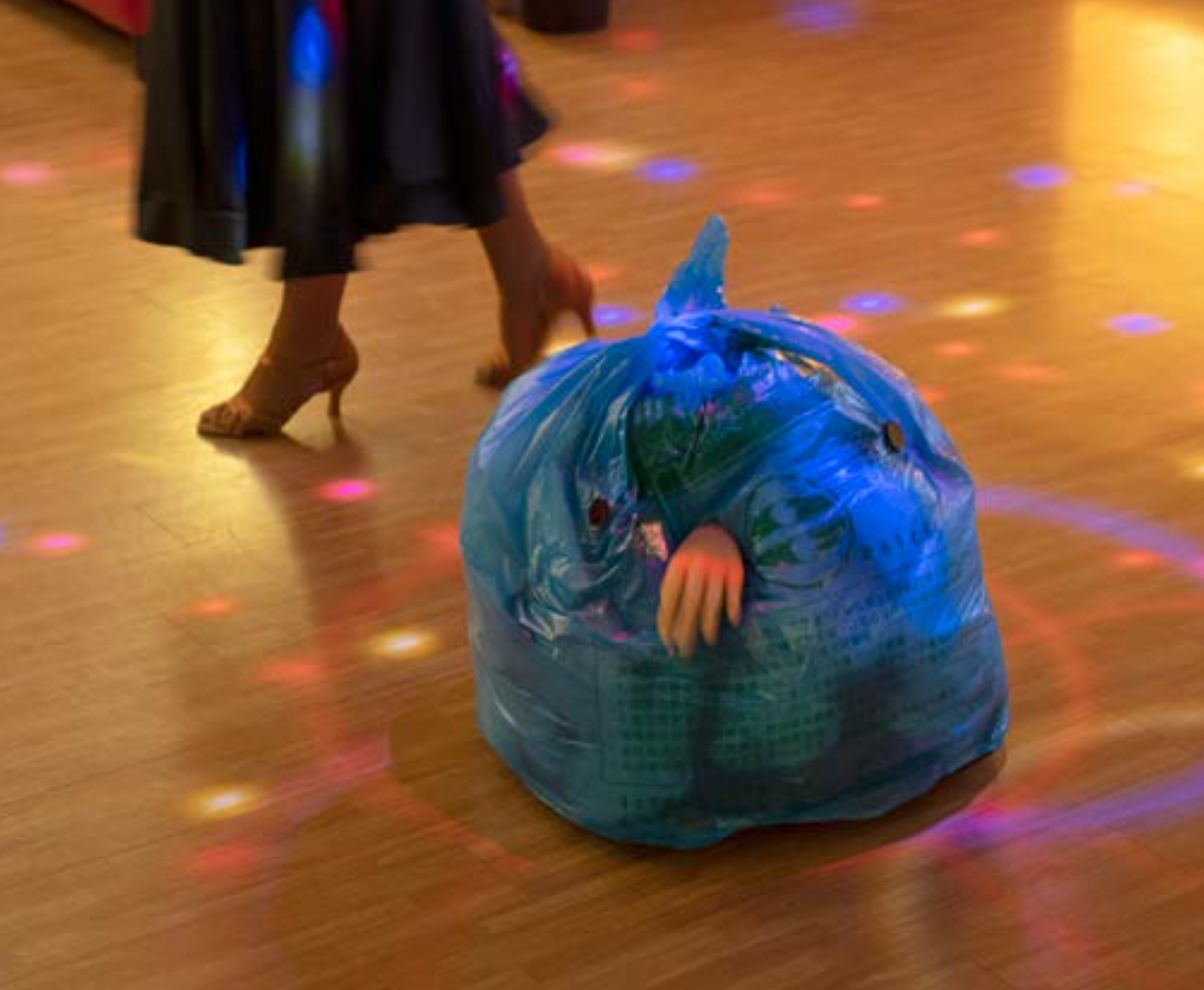
from the "Mimicry Elise Protocol" art project
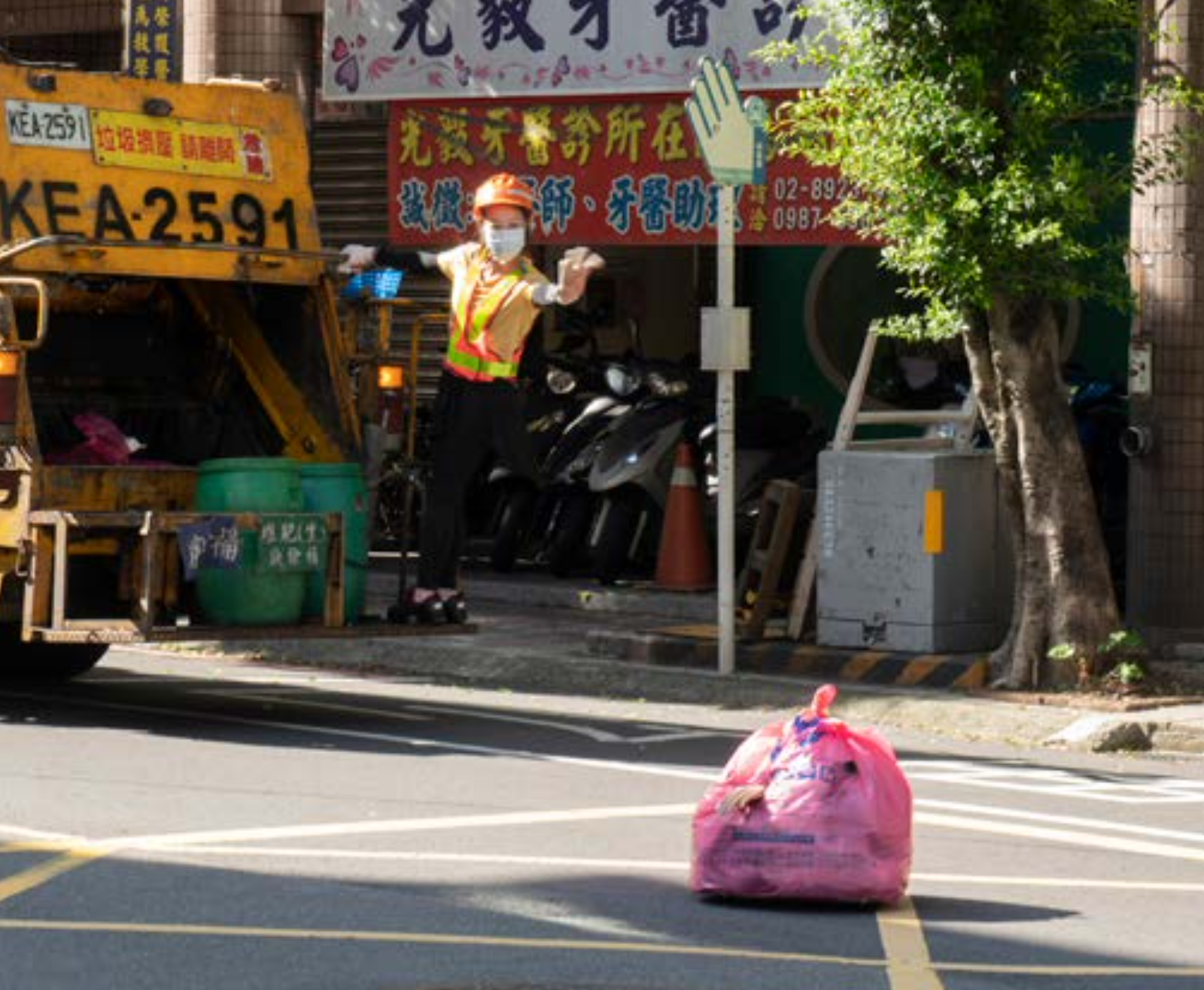
from the "Mimicry Elise Protocol" art project
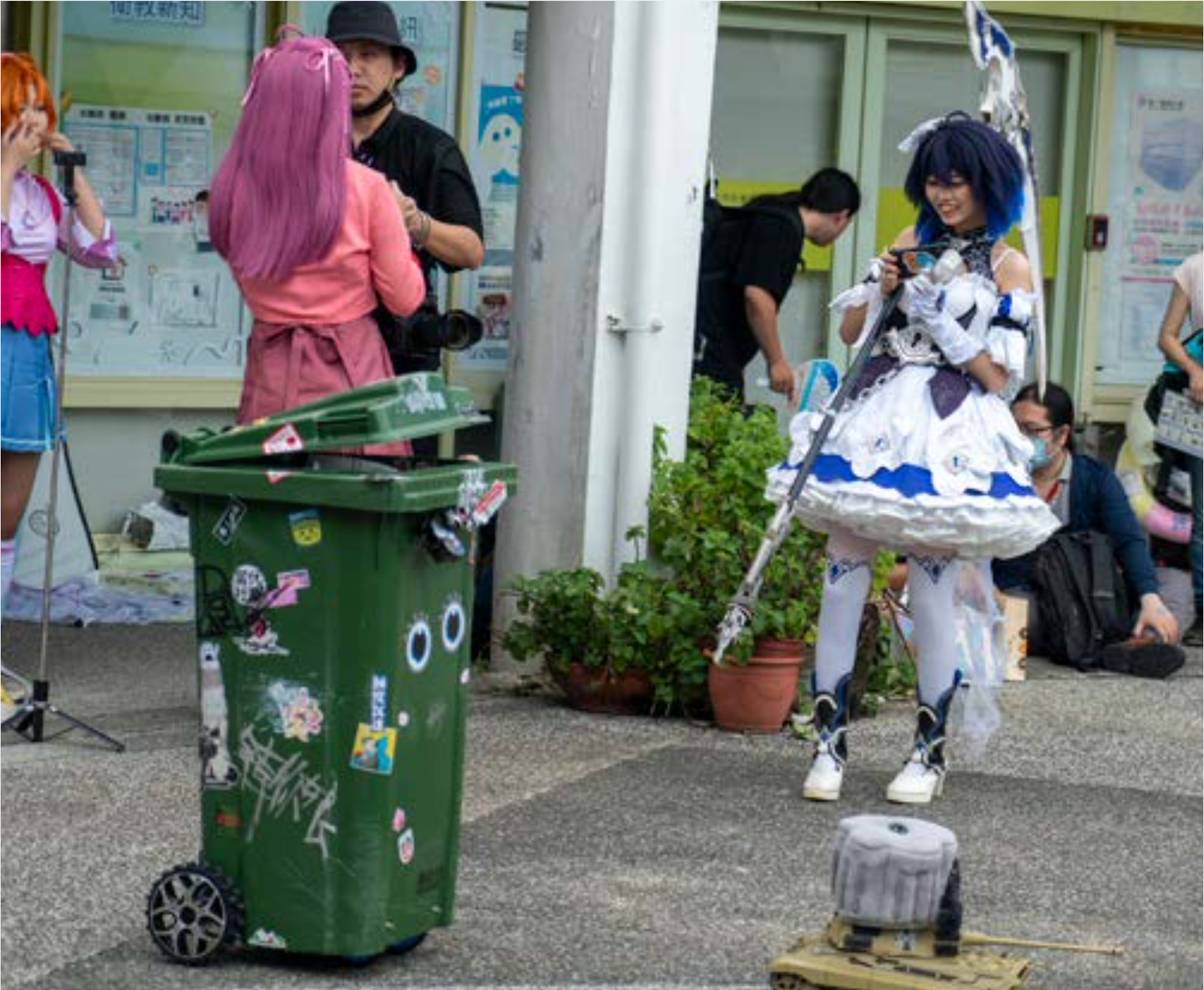
from the "Mimicry Elise Protocol" art project
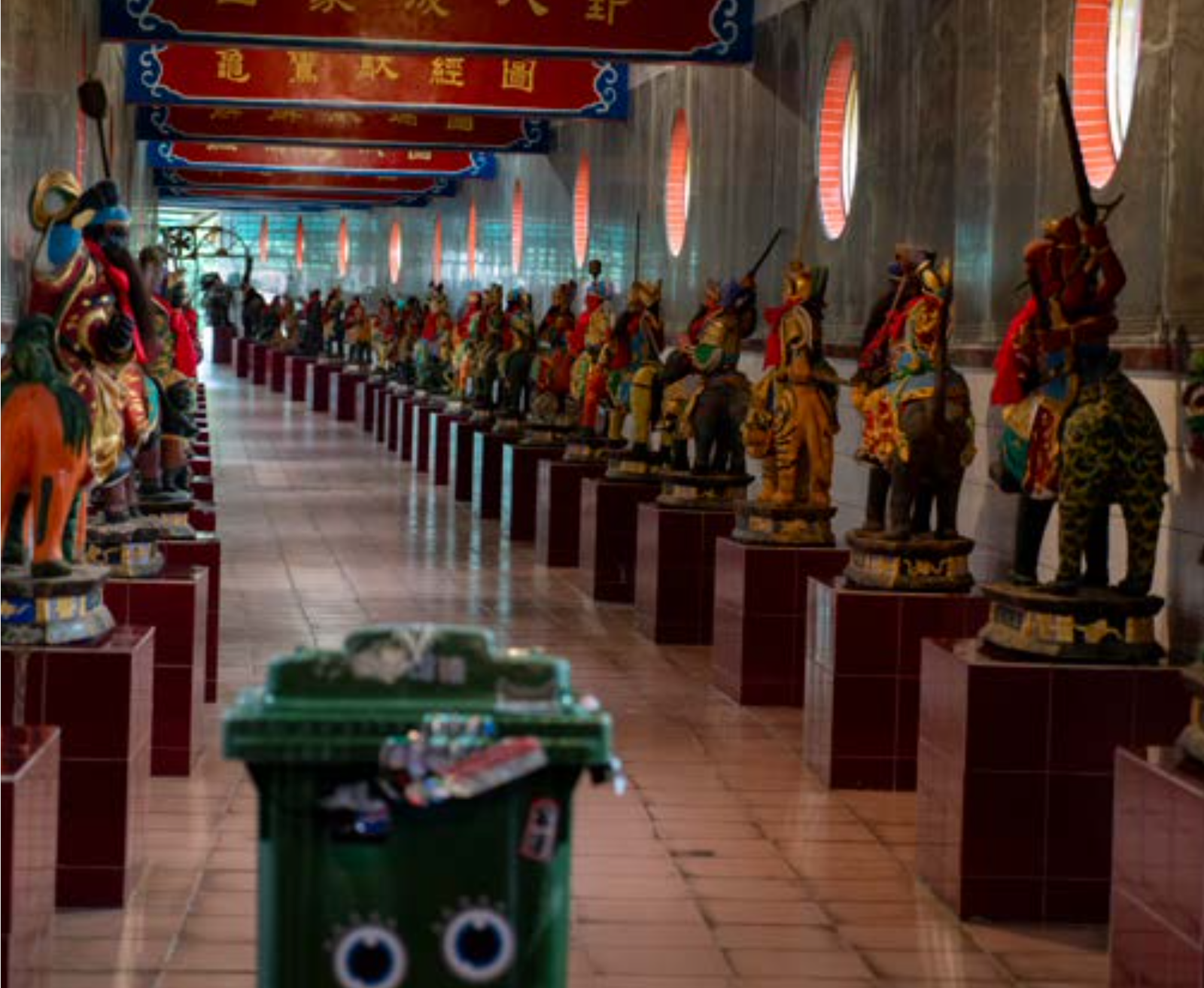
from the "Mimicry Elise Protocol" art project
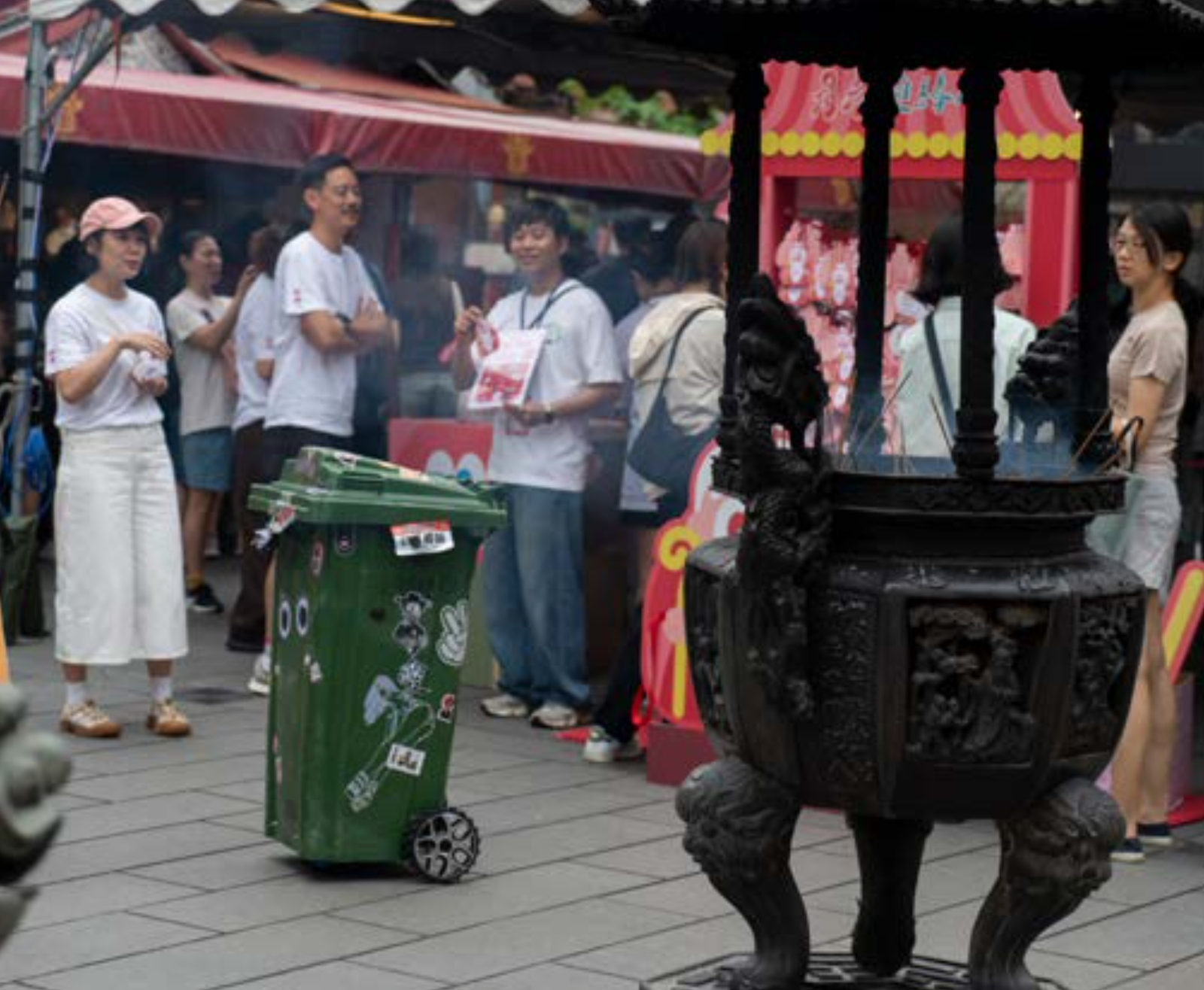
from the "Mimicry Elise Protocol" art project
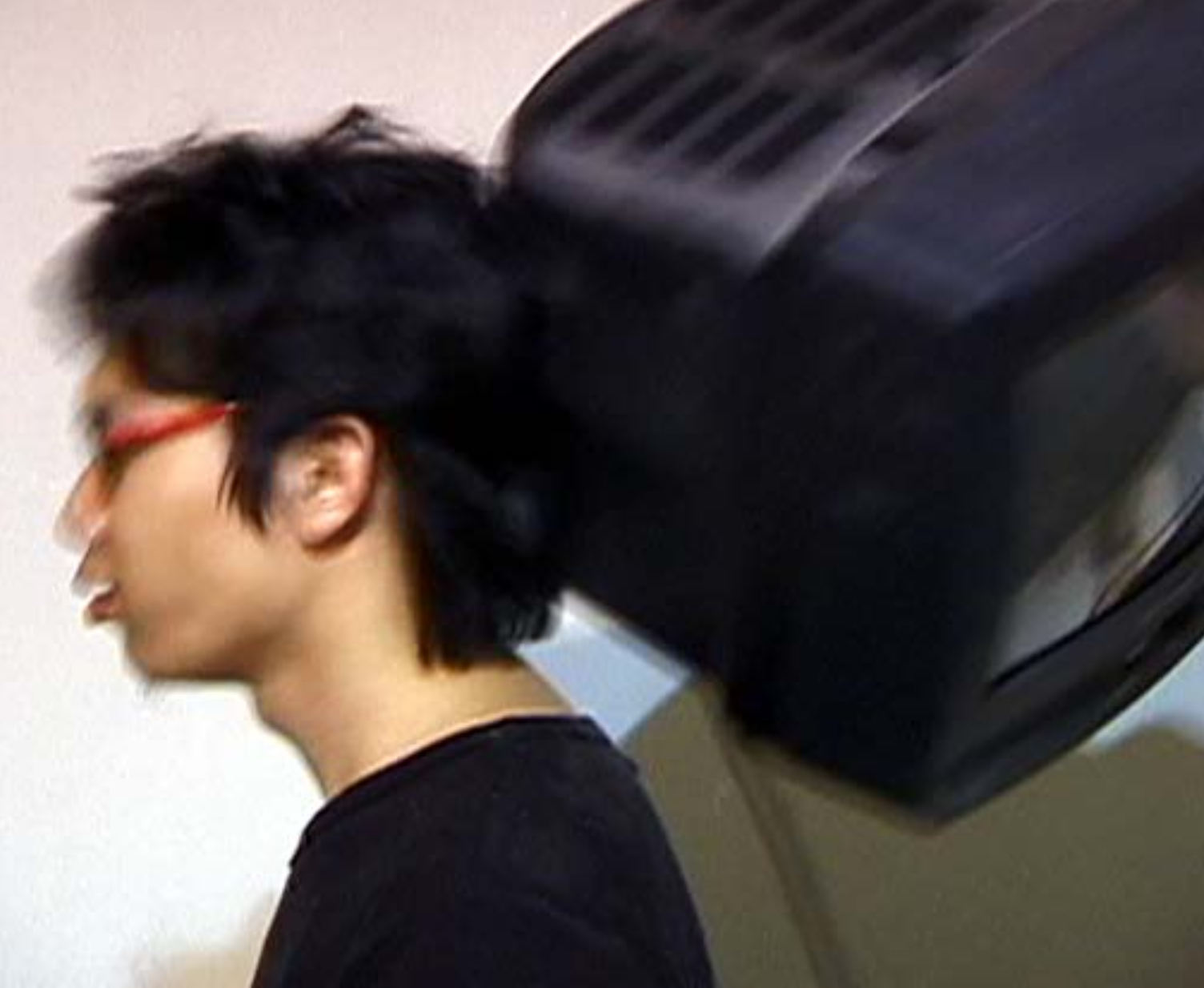
from "Eighteen Copper Guardians in Shao-Lin Temple and Penetration: The Perceptive" by Tsui Kuang Yu (2001)
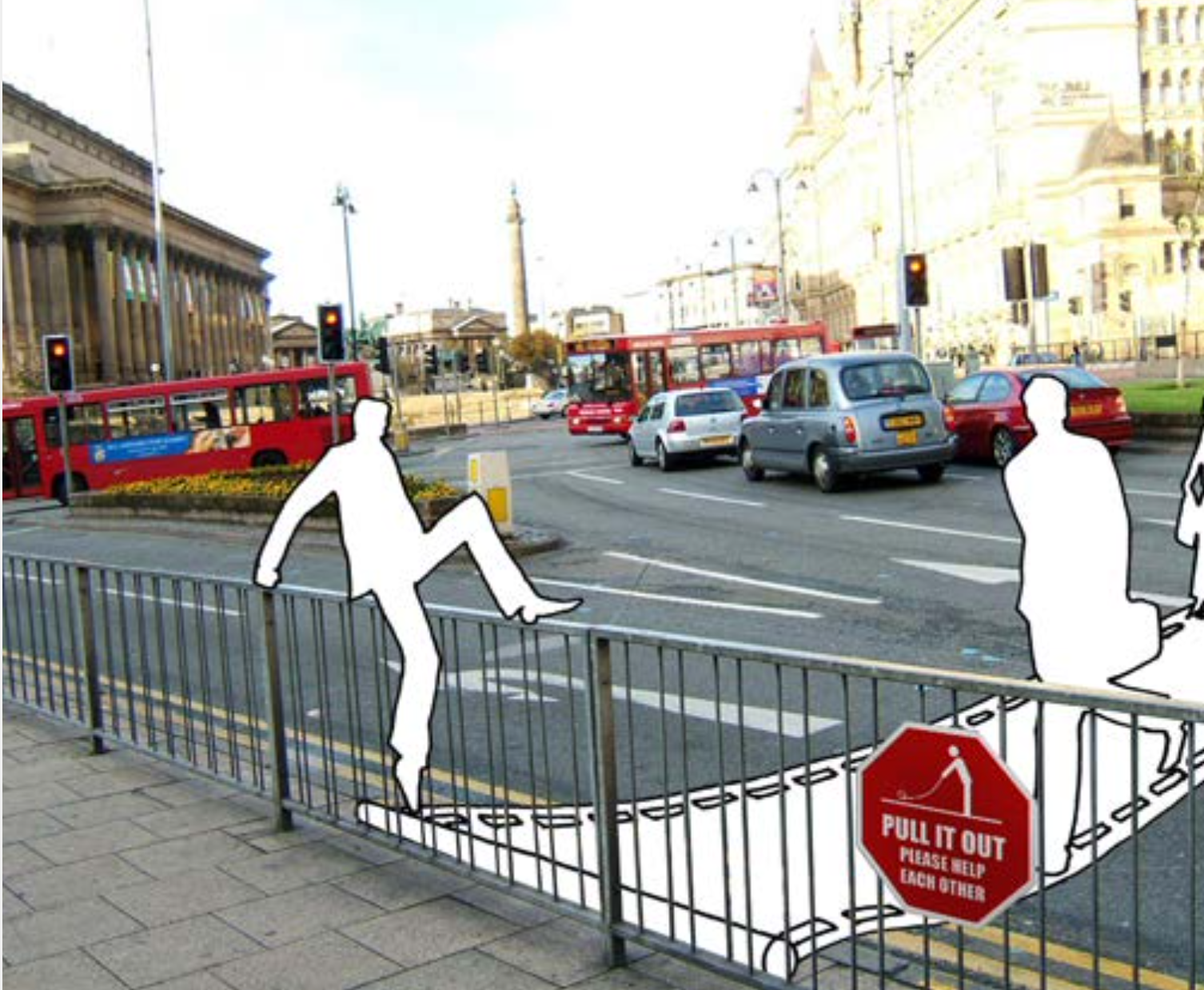
from "Invisible City: Liverpool Top 9" by Tsui Kuang Yu (2006)